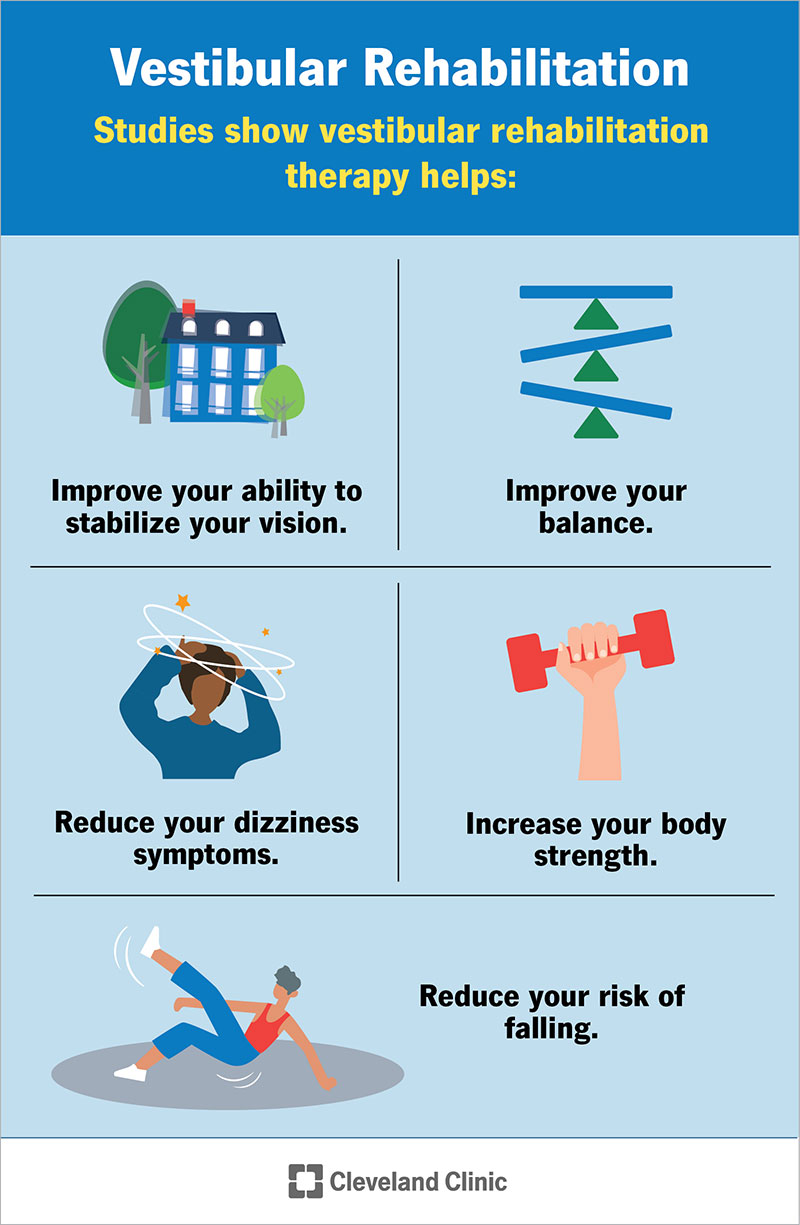
Vestibular Rehabilitation Exercises Chart
Vestibular Rehabilitation Exercises Chart - If you need information on specific vestibular diagnoses or concepts about dizziness and balance as a whole. 1) habituation, 2) gaze stabilization, and/or 3) balance training.4. Web vestibular rehabilitation therapy involves exercises that help you manage dizziness and balance issues (imbalance). Our fact sheets are designed as general introductions to each subject and are intended to be concise. • if you use glasses, wear them while performing exercises. Slowly build up these repetitions over days or weeks until you reach the target number of repetitions. 2) these are meant to be worked through slowly and progressively. • if you use glasses, wear them while performing exercises. You’re gonna get dizzy or off balance to improve dizziness and balance later. These are very strong indications for pt. Web vestibular rehabilitation therapy (vrt) is a specialized form of therapy intended to alleviate problems caused by vestibular disorders, primarily vertigo and dizziness, gaze instability, and/or imbalance and falls. Web vestibular rehabilitation (20 exercises) caveats: Slowly/quickly move head up/ down with eyes open/closed. Web some of the different kinds of exercises include: Let symptoms subside, plus seconds, between each repetition. You’re gonna get dizzy or off balance to improve dizziness and balance later. 1) habituation, 2) gaze stabilization, and/or 3) balance training.4. • if you use glasses, wear them while performing exercises. You’re gonna get your muscles burning to get stronger, you’re gonna get out of breath with a run to gain endurance. Slowly build up these repetitions over days or weeks until you reach the target number of repetitions. Our fact sheets are designed as general introductions to each subject and are intended to be concise. • if you use glasses, wear them while performing exercises. • walking, or an aerobic (continuous movement) exercise program. The exercises are designed to challenge your balance system and often cause symptoms of dizziness. Vestibular rehabilitation exercises are an aid to recovery and. While in position and looking straight ahead, turn head 45o to right/left. 1) habituation, 2) gaze stabilization, and/or 3) balance training.4. Web vestibular rehabilitation therapy involves exercises that help you manage dizziness and balance issues (imbalance). Repeat while moving head side to side for ______ seconds. • speed of eye movement should be increased as long as the target stays. Together with your treating doctor, please select the exercises that you may be able to perform. Web during vestibular rehabilitation therapy (vrt), home exercises are a vital part of treatment. Feet away at eye level, moving seconds. These are very strong indications for pt. Each exercise should be performed 20 or. The exercises are designed to challenge your balance system and often cause symptoms of dizziness. 2) these are meant to be worked through slowly and progressively. These are very strong indications for pt. Web vestibular rehabilitation therapy (vrt) is a specialized form of therapy intended to alleviate problems caused by vestibular disorders, primarily vertigo and dizziness, gaze instability, and/or imbalance. Vestibular rehabilitation (vr) is a specialized form of therapy intended to alleviate both the primary and secondary problems due to vestibular disorders. 1) habituation, 2) gaze stabilization, and/or 3) balance training.4. This is a normal response to these stimulating exercises. Web vestibular rehabilitation (20 exercises) caveats: Each exercise should be performed 20 or. Web vestibular rehabilitation therapy (vrt) is a specialized form of therapy intended to alleviate problems caused by vestibular disorders, primarily vertigo and dizziness, gaze instability, and/or imbalance and falls. • speed of eye movement should be increased as long as the target stays in focus. • walking, or an aerobic (continuous movement) exercise program. Web indications for therapy. Feet away. Web vestibular compensation is a process that allows the brain to regain balance control and minimise dizziness symptoms when there is damage to, or an imbalance between, the right and left vestibular organs (balance organs) in the inner ear. 1) habituation, 2) gaze stabilization, and/or 3) balance training.4. Our fact sheets are designed as general introductions to each subject and. While in position and looking straight ahead, turn head 45o to right/left. • walking, or an aerobic (continuous movement) exercise program. • speed of eye movement should be increased as long as the target stays in focus. Keeping eyes fixed on a single stationary target, walk toward target place on wall ______ feet away at eye level, moving head up. Web along with these exercises, gradually increase your daily activities. • if you use glasses, wear them while performing exercises. Slowly build up these repetitions over days or weeks until you reach the target number of repetitions. One of the best ways of helping your balance system is to do regular walks. Web so stick through it, it really does. 1) habituation, 2) gaze stabilization, and/or 3) balance training.4. A physical therapist (pt) or occupational therapist (ot) specialist will design an individualized treatment plan with appropriate exercises to be performed at a. Vestibular rehabilitation (vr) is a specialized form of therapy intended to alleviate both the primary and secondary problems due to vestibular disorders. Repeat while moving head side to. • if you use glasses, wear them while performing exercises. • speed of eye movement should be increased as long as the target stays in focus. These are very strong indications for pt. • if you use glasses, wear them while performing exercises. Slowly/quickly move head up/ down with eyes open/closed. Vestibular rehabilitation exercises are an aid to recovery and you should do them alongside an increase in your daily activities. Keeping eyes fixed on a single stationary target, walk toward target place on wall ______ feet away at eye level, moving head up and down for ______ seconds. If you need information on specific vestibular diagnoses or concepts about dizziness and balance as a whole. Web along with these exercises, gradually increase your daily activities. Web what is vestibular rehabilitation? This therapy may help people cope with the symptoms of conditions such as vertigo and labyrinthitis. This fact sheet provides information on vestibular rehabilitation exercises for people with dizziness and balance problems. Web vestibular rehabilitation therapy involves exercises that help you manage dizziness and balance issues (imbalance). Web some of the different kinds of exercises include: Web vestibular compensation is a process that allows the brain to regain balance control and minimise dizziness symptoms when there is damage to, or an imbalance between, the right and left vestibular organs (balance organs) in the inner ear. Keeping eyes fixed on a single stationary target, walk toward target place on wall head up and down for head side to side for.
Cawthorne Cooksey exercises for Benign Paroxysmal ositional Vertigo2
Vestibular Rehabilitation Exercises Chart

Vestibular Rehabilitation rehabilitation vestibular Rehabilitation
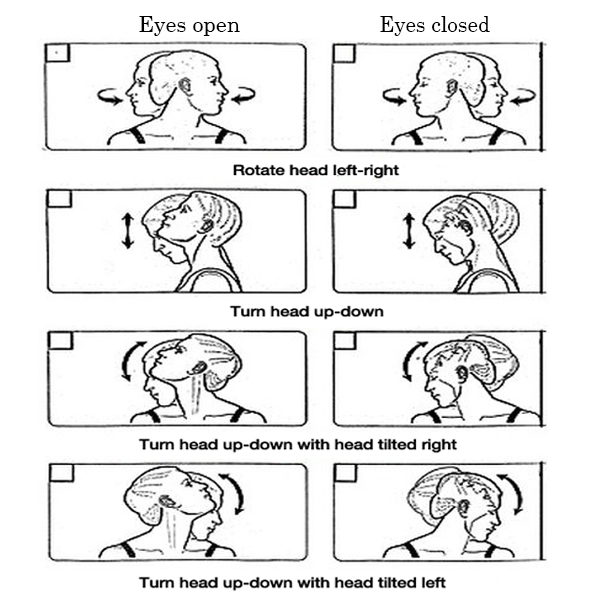
Vestibular Exercises Simplified… Dr Shreha Pathak ENT Specialist

Vestibular Rehabilitation Exercises Chart
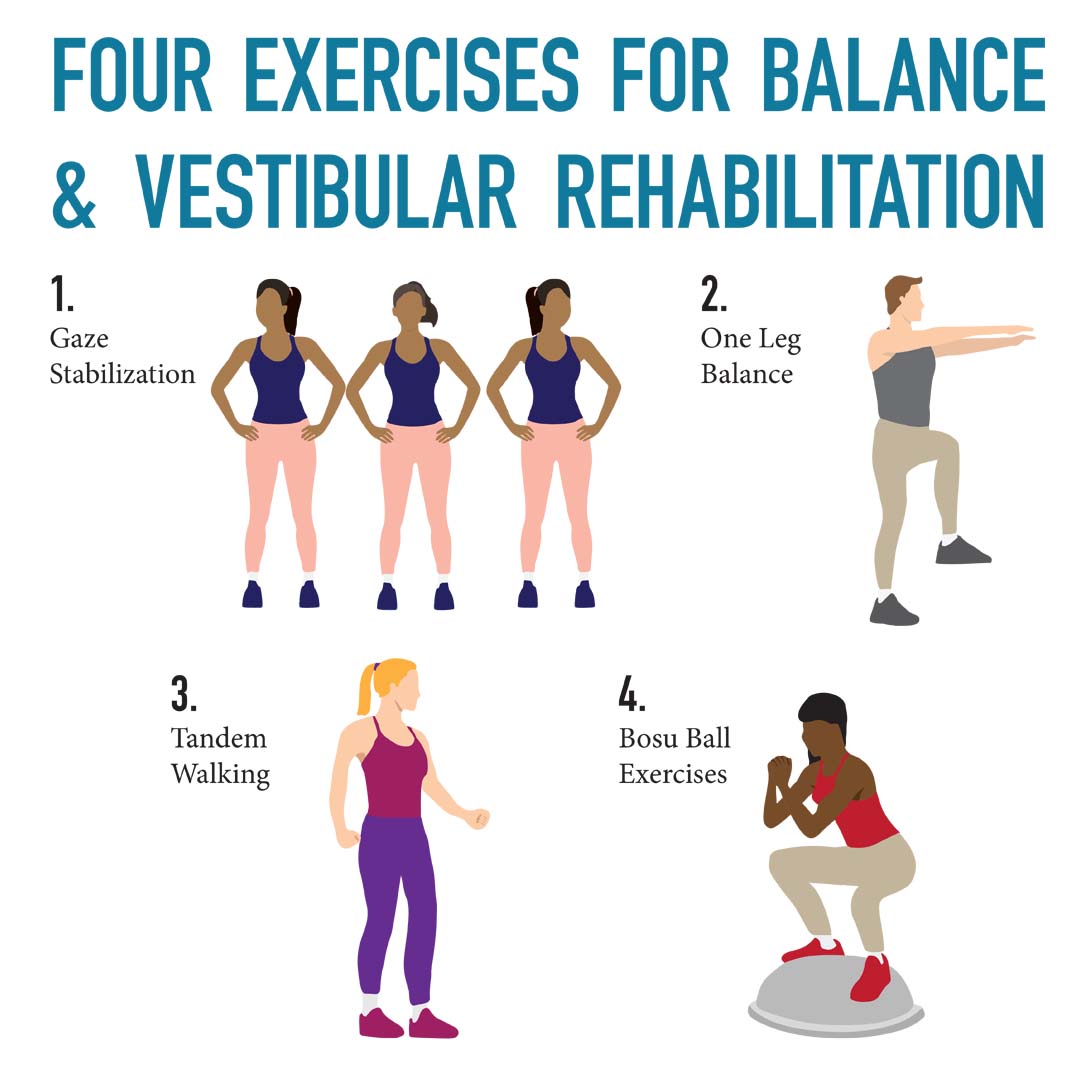
Four Exercises for Balance & Vestibular Rehabilitation Renew Physical
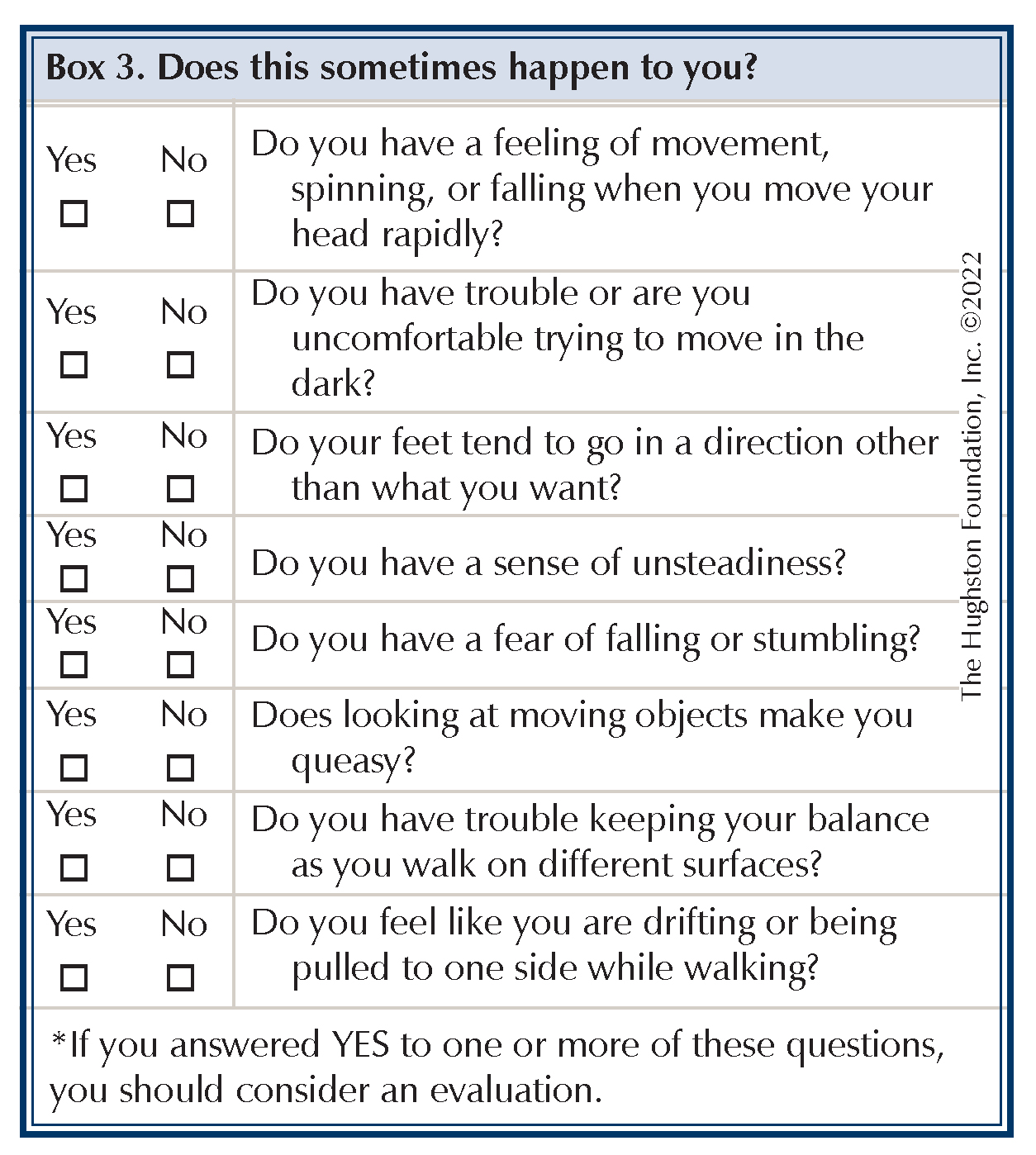
Vestibular Rehabilitation Hughston Clinic

Vestibular Rehabilitation Therapy (VRT) Vestibular Disorders Association

Vestibular Exercises at Home Autism Kids Vestibular Activities 2022

BPPV Resources Vestibular Today
Repeat While Moving Head Side To Side For ______ Seconds.
Web Vestibular Rehabilitation Therapy (Vrt) Is A Specialized Form Of Therapy Intended To Alleviate Problems Caused By Vestibular Disorders, Primarily Vertigo And Dizziness, Gaze Instability, And/Or Imbalance And Falls.
Web Doctors May Also Recommend Vestibular Rehabilitation Exercises, As Shown Below.
Web So Stick Through It, It Really Does Help.
Related Post: