
Chemical Conversion Chart
Chemical Conversion Chart - Web chemical conversion chart acetates acids. 2 btu is the amount of. Web factors for unit conversions. Web what is a conversion factor in chemistry? Web english to metric conversions. The (si) contains seven base units that each represent a different kind of physical quantity. The rest of the world reports results in système international d'unités. 1 kg = 1000 g = 0.001 metric ton =. Meter (m) = 39.37 inches (in.) = 1.094 yards (yd) centimeter (cm) = 0.01 m (exact, definition) millimeter (mm) =. Web if you choose to use the conversion factor method, memorize the most important ones used in your courses. Figure \ (\pageindex {1}\) shows that we need 2 hydrogen atoms and 1 oxygen atom to make one water molecule. The (si) contains seven base units that each represent a different kind of physical quantity. Web free online unit converter to easily convert between different units of measurement for engineers, scientists and technicians. Web if you choose to use the conversion factor method, memorize the most important ones used in your courses. 2 btu is the amount of. Here are a few useful conversion. Web a fraction that has equivalent quantities in the numerator and the denominator but expressed in different units is called a conversion factor. This is the most complete collection of unit. 1 lb = 453.6 g. Bold values indicate exact conversion values. If you choose to use a conversion diagram, make sure to know. Web conversion factors derived from chemical equations. [ (% × d) / mw] × 10 = molarity. For the following abstract example and. Bold values indicate exact conversion values. Web use chemical formulas as conversion factors. The conversion factors are 1 mol c2h6o over 46.07 g c2h6o, 1 mol o over 1 mol c2h6o,. Web chemical conversion chart acetates acids. Web units and conversion factors. So how can you learn everything about chemistry without effort? Web comparison and relation between conversion (x), selectivity (s) and yield (y) for a chemical reaction. (mass, length, volume, and area conversions are good to 4 significant figures) mass. Web a conversion factor is a ratio that describes the relationship between two units. Web si units and conversions. Chemical equations show relationships or equalities between reactants and products measured in. 1 lb = 453.6 g. Web apply multiple conversion factors to convert between a mass and a particle count of two substances that participate in a chemical reaction. (mass, length, volume, and area conversions are good to 4 significant figures) mass. [ (% × d) / mw] × 10 = molarity. Web use chemical formulas as conversion factors. Web comparison and relation between conversion (x), selectivity (s) and yield (y) for a chemical reaction. Web what is a conversion factor in chemistry? The rest of the world reports results in système international d'unités. Web prepare a concept map and use the proper conversion factor. The meter defined as the length of the path traveled. Web what is a conversion factor in chemistry? Web use chemical formulas as conversion factors. Web factors for unit conversions. In the us, most laboratory test results are reported in what are termed conventional units; Chemistry might seem intimidating and counterintuitive at first, but it is also extremely useful. Units in the first column. Bold values indicate exact conversion values. Web apply multiple conversion factors to convert between a mass and a particle count of two substances that participate in a chemical reaction. Web the conversion relations in this table are commonly used to equate masses and weight assuming a nominal value for g at the surface of the. Web the following equation is used for calculating acid and base molarity where the concentration is given in wt %: Web factors for unit conversions. Web a fraction that has equivalent quantities in the numerator and the denominator but expressed in different units is called a conversion factor. (mass, length, volume, and area conversions are good to 4 significant figures). Web comparison and relation between conversion (x), selectivity (s) and yield (y) for a chemical reaction. Web what is a conversion factor in chemistry? Meter (m) = 39.37 inches (in.) = 1.094 yards (yd) centimeter (cm) = 0.01 m (exact, definition) millimeter (mm) =. Web factors for unit conversions. Web chemical conversion chart acetates acids. The meter defined as the length of the path traveled. Chemical equations show relationships or equalities between reactants and products measured in moles. 1 kg = 1000 g = 0.001 metric ton =. Web free online unit converter to easily convert between different units of measurement for engineers, scientists and technicians. Web english to metric conversions. The (si) contains seven base units that each represent a different kind of physical quantity. Web comparison and relation between conversion (x), selectivity (s) and yield (y) for a chemical reaction. To create a conversion factor for converting teaspoons to milliliters we can look in any modern. Web factors for unit conversions. Meter (m) = 39.37 inches (in.) = 1.094 yards (yd) centimeter (cm) = 0.01 m (exact, definition) millimeter (mm) =. Web chemical conversion chart acetates acids. Web conversion factors derived from chemical equations. Web english to metric conversions. In the us, most laboratory test results are reported in what are termed conventional units; The meter defined as the length of the path traveled. Web units and conversion factors. Morrison department of chemical engineering. Learn how to do conversions between two units in chemistry using conversion factors. 2 btu is the amount of. This is the most complete collection of unit. Web apply multiple conversion factors to convert between a mass and a particle count of two substances that participate in a chemical reaction.
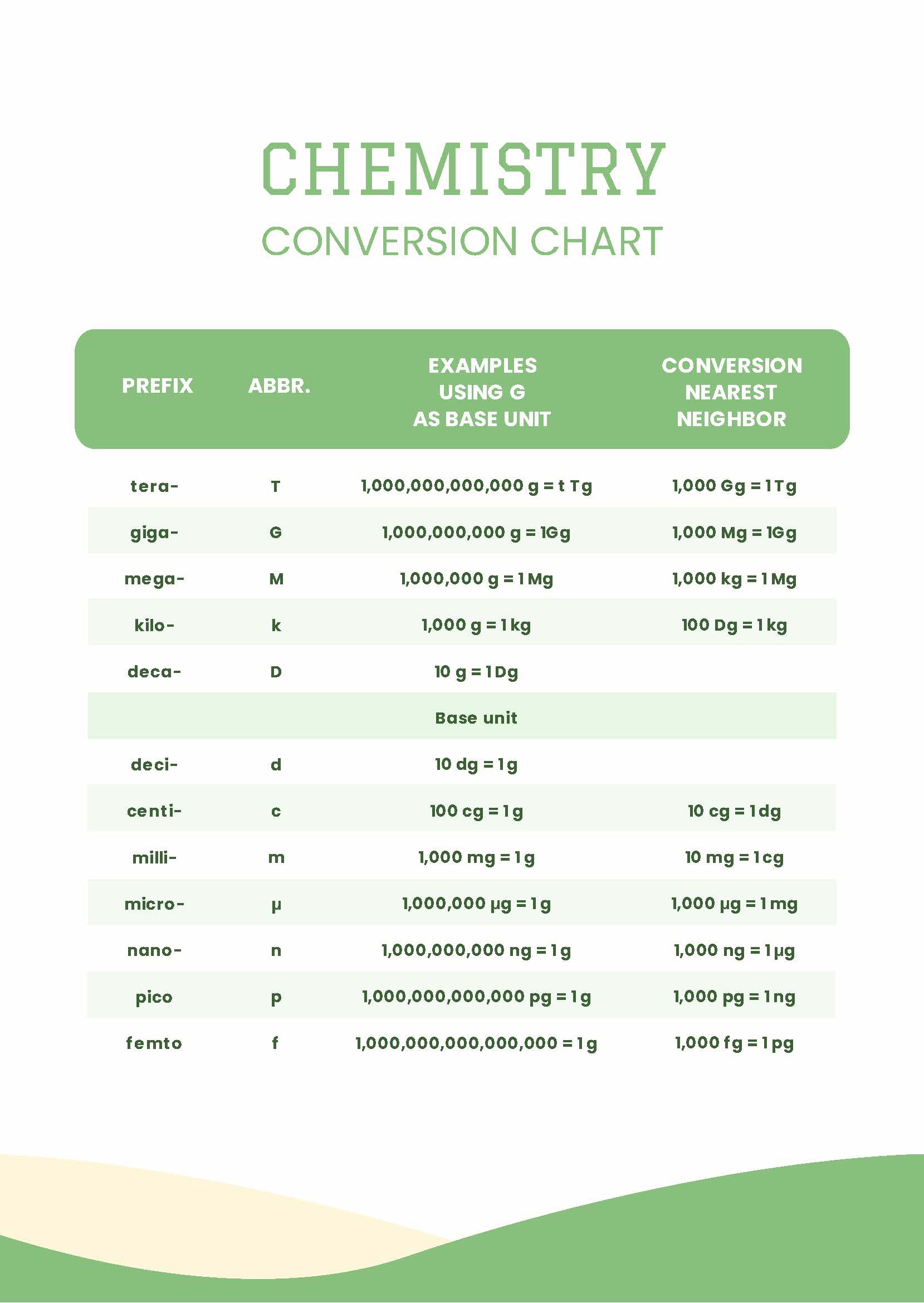
Chemistry 1 Conversion Chart

Printable Chemistry Conversion Chart
Printable Chemistry Conversion Chart
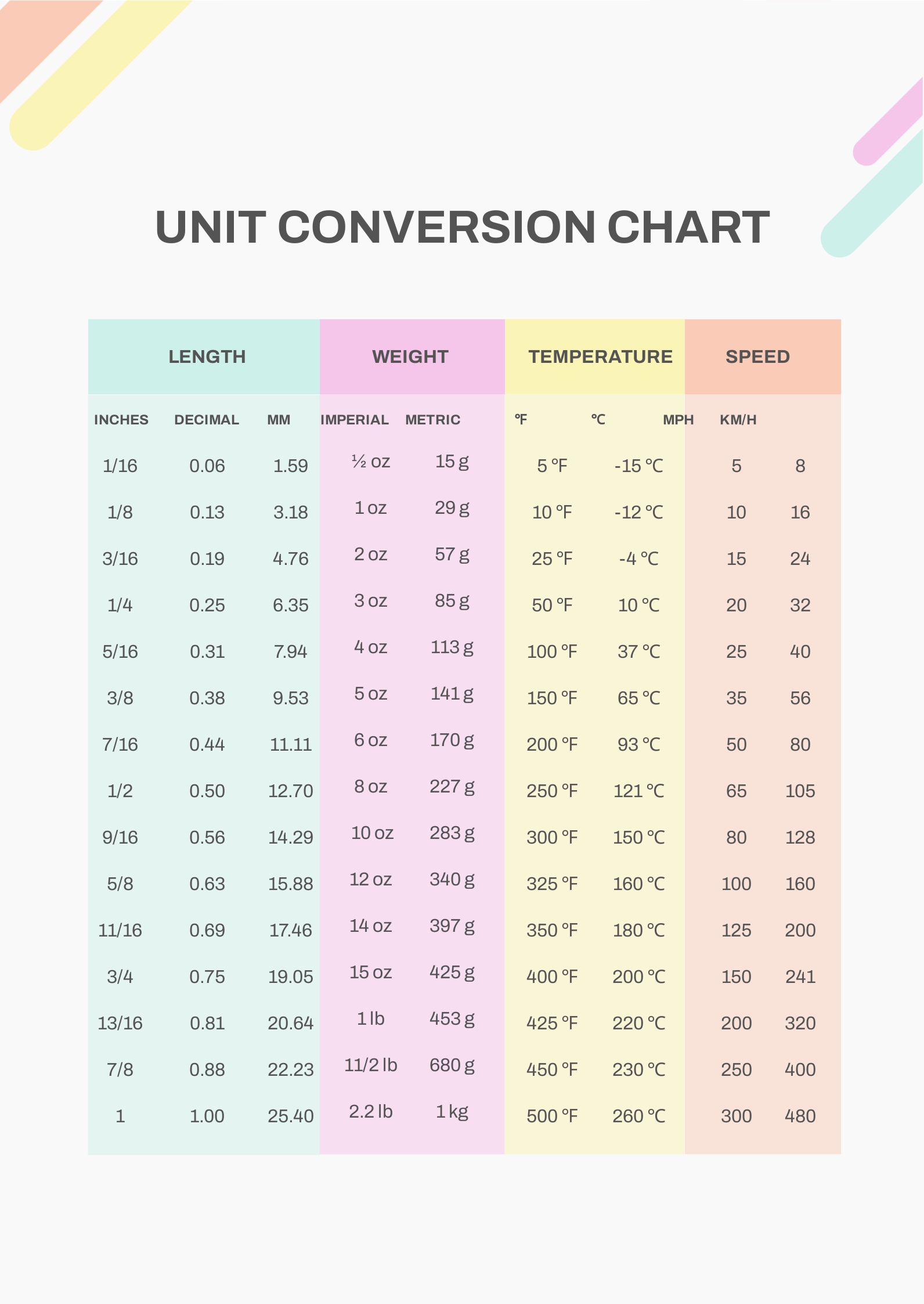
Chemistry Unit Conversion Chart
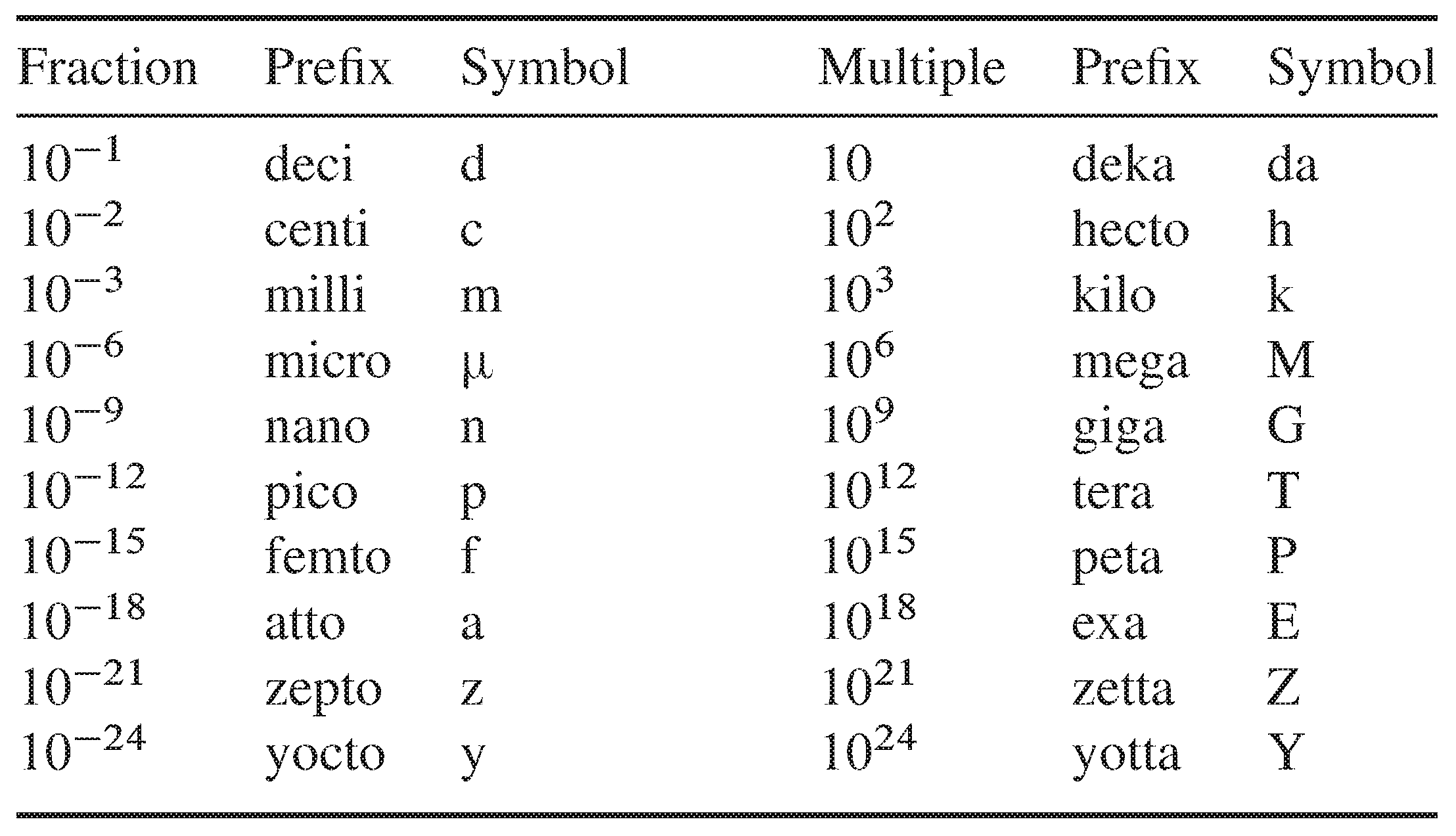
Chemistry SI Unit Conversion Chart

Conversion Chart Chemistry Pdf

Printable Metric Conversion Chart For Chemistry
Printable Chemistry Conversion Chart
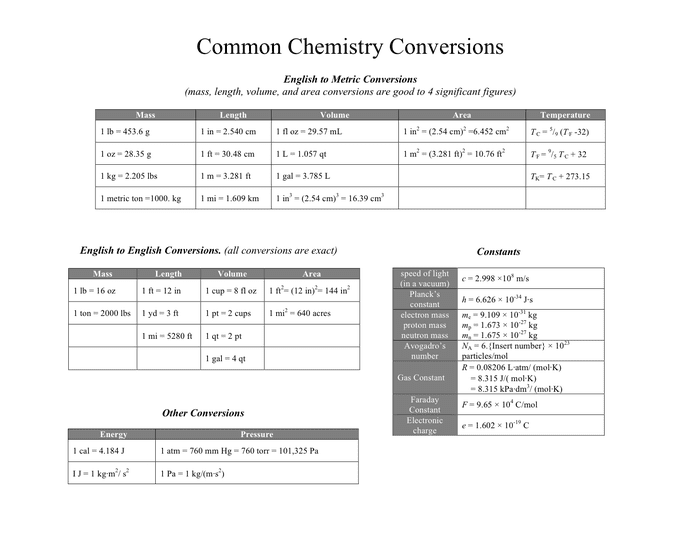
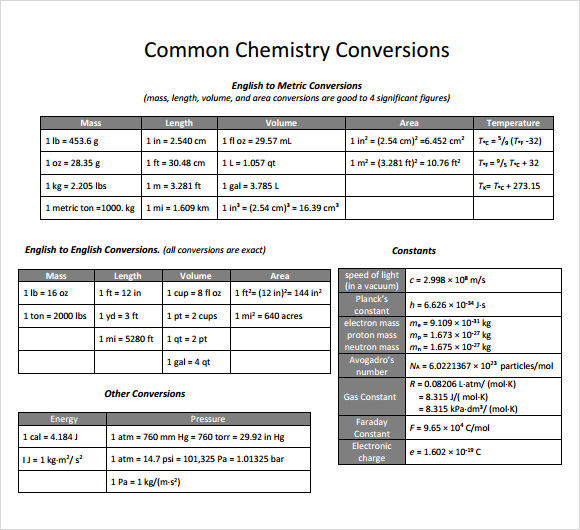
Common Chemistry Conversions Chart
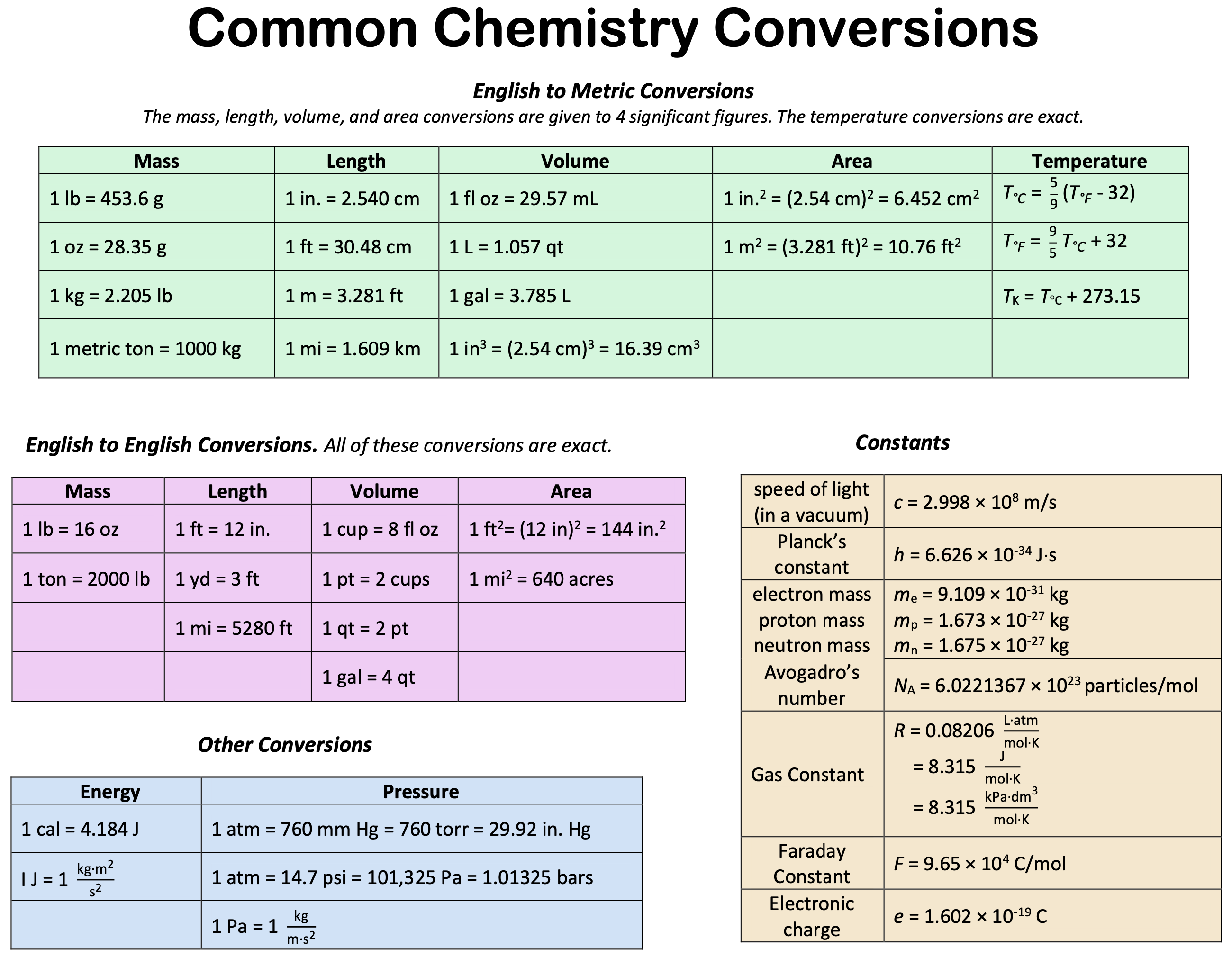
Metric Conversion Chart For Chemistry
1 Kg = 1000 G = 0.001 Metric Ton =.
Here Are A Few Useful Conversion.
(Mass, Length, Volume, And Area Conversions Are Good To 4 Significant Figures) Mass.
Web Si Units And Conversions.
Related Post: