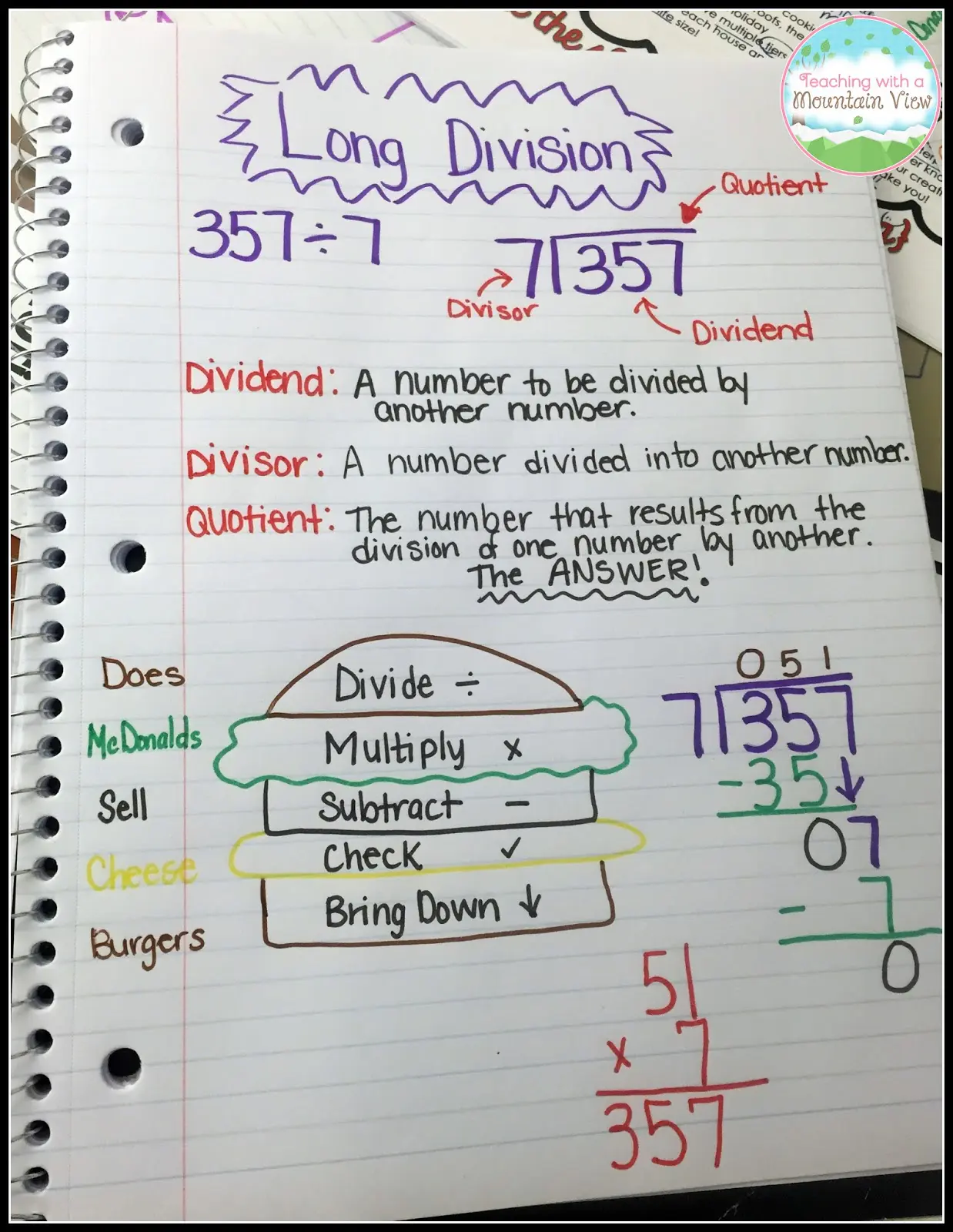
Anchor Chart For Long Division
Anchor Chart For Long Division - There are no holes punched in the anchor chart. Web use this resource as a printable anchor chart for your classroom or students to help with long division! Web long division using the standard algorithm anchor chart use this to trace your own onto chart paper or print it out as a reference for your students' interactive notebooks. You may add holes using hole punch or add magnets to the back. Web anchor charts are a way to make a lesson stick around long after you’ve taught the skills. Web an anchor chart is a great way of displaying a mathematical method or strategy. Web instruct them to create an anchor chart poster on the long division method based on the steps they learned in the video. It serves as a guide for students just learning long division. Web there are four different long division anchor charts included.1. The idea is that you create them as part of a lesson or unit, then. This chart’s purpose is to help students remember long division’s sequence. Web long division using the standard algorithm anchor chart use this to trace your own onto chart paper or print it out as a reference for your students' interactive notebooks. Web this anchor chart includes information on how to use the standard algorithm for long division. Web use this resource as a printable anchor chart for your classroom or students to help with long division! Teaching long division is a rite of passage in fourth grade. It serves as a guide for students just learning long division. There are no holes punched in the anchor chart. Web printed, laminated and cut out anchor chart ready to use! Web long division anchor chart. This set of anchor charts displays different division strategies from simple sharing and repeated. Web long division anchor chart. Not for publication without the approval. Web long division using the standard algorithm anchor chart use this to trace your own onto chart paper or print it out as a reference for your students' interactive notebooks. There are no holes punched in the anchor chart. You may add holes using hole punch or add magnets. Web this bundle includes anchor charts for greatest common factor (gcf) and least common multiple (lcm), units of capacity, and long division. These charts are created during the instruction portion of the lesson. The idea is that you create them as part of a lesson or unit, then. There are no holes punched in the anchor chart. Web long division. Web web this anchor chart for long division will show your students the 4 steps (divide, multiply, subtract, bring down) of the traditional algorithm. Long division anchor chart pos. Web there are four different long division anchor charts included.1. Web are you teaching or introducing the long division to your students? Web long division anchor chart. Web this bundle includes anchor charts for greatest common factor (gcf) and least common multiple (lcm), units of capacity, and long division. Web anchor charts are a way to make a lesson stick around long after you’ve taught the skills. This set of anchor charts displays different division strategies from simple sharing and repeated. You can guide them to include. Teaching long division is a rite of passage in fourth grade. This chart’s purpose is to help students remember long division’s sequence. Web this bundle includes anchor charts for greatest common factor (gcf) and least common multiple (lcm), units of capacity, and long division. Web web this anchor chart for long division will show your students the 4 steps (divide,. Web long division anchor chart. Teaching long division is a rite of passage in fourth grade. Web an anchor chart is a great way of displaying a mathematical method or strategy. Web long division using the standard algorithm anchor chart use this to trace your own onto chart paper or print it out as a reference for your students' interactive. There are no holes punched in the anchor chart. Web tips for teaching long divisions strategies, division error analysis, and division word problems. Long division anchor chart pos. Web long division using the standard algorithm anchor chart use this to trace your own onto chart paper or print it out as a reference for your students' interactive notebooks. Web long. Web web this anchor chart for long division will show your students the 4 steps (divide, multiply, subtract, bring down) of the traditional algorithm. Web use this resource as a printable anchor chart for your classroom or students to help with long division! Not for publication without the approval. Web an anchor chart is a tool used to facilitate discussions. Web anchor charts are a way to make a lesson stick around long after you’ve taught the skills. Not for publication without the approval. This chart’s purpose is to help students remember long division’s sequence. Long division anchor chart pos. Web are you teaching or introducing the long division to your students? You can guide them to include the basic. Web anchor charts are a way to make a lesson stick around long after you’ve taught the skills. The idea is that you create them as part of a lesson or unit, then. Teaching long division is a rite of passage in fourth grade. Web instruct them to create an anchor chart. Web this anchor chart includes information on how to use the standard algorithm for long division. These charts are created during the instruction portion of the lesson. You may add holes using hole punch or add magnets to the back. Web long division anchor chart. Web there are four different long division anchor charts included.1. This chart’s purpose is to help students remember long division’s sequence. Web printed, laminated and cut out anchor chart ready to use! Web an anchor chart is a tool used to facilitate discussions and record appropriate math strategies. Web instruct them to create an anchor chart poster on the long division method based on the steps they learned in the video. Web long division using the standard algorithm anchor chart use this to trace your own onto chart paper or print it out as a reference for your students' interactive notebooks. Teaching long division is a rite of passage in fourth grade. Not for publication without the approval. Web this bundle includes anchor charts for greatest common factor (gcf) and least common multiple (lcm), units of capacity, and long division. There are no holes punched in the anchor chart. Web an anchor chart is a great way of displaying a mathematical method or strategy. Web web this anchor chart for long division will show your students the 4 steps (divide, multiply, subtract, bring down) of the traditional algorithm.
Long Division Anchor Chart Interactive Notebooks and Posters Anchor

Long Division Anchor Chart Poster Division anchor chart, Anchor
25 Delightful Long Division Activities Teaching Expertise
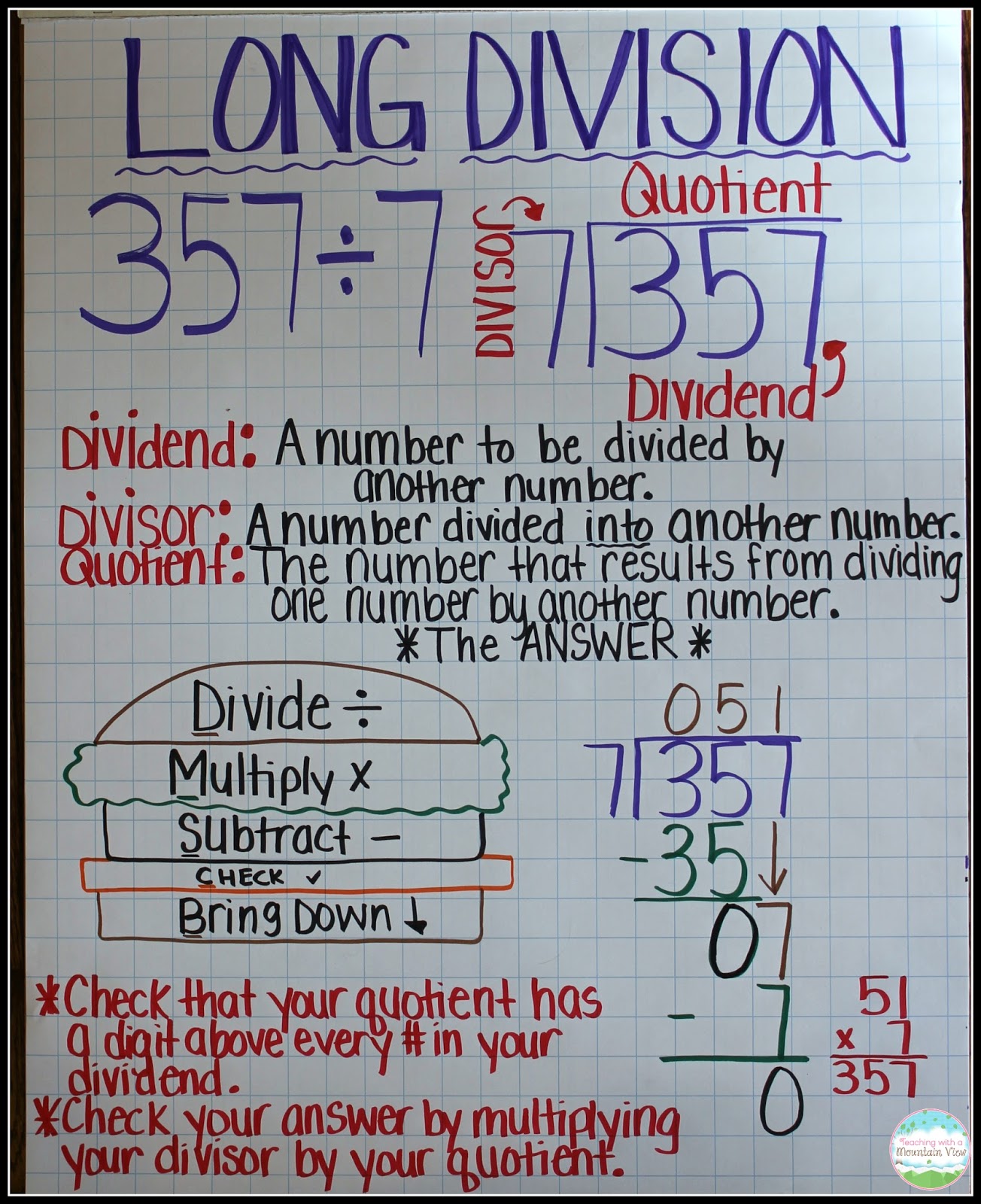
Teaching With a Mountain View Teaching Long Division

Just 23 Totally Perfect 4th Grade Anchor Charts WeAreTeachers

long division anchor chart for math Math anchor charts, Anchor charts

Anchor Chart For Long Division A Visual Reference of Charts Chart Master

long division fifth grade anchor chart Anchor charts, Teaching math

Long Division Anchor Chart Division anchor chart, Math charts

Math Anchor Chart for Long Division
The Idea Is That You Create Them As Part Of A Lesson Or Unit, Then.
Web Tips For Teaching Long Divisions Strategies, Division Error Analysis, And Division Word Problems.
Web Anchor Charts Are A Way To Make A Lesson Stick Around Long After You’ve Taught The Skills.
This Set Of Anchor Charts Displays Different Division Strategies From Simple Sharing And Repeated.
Related Post: